Friday, October 6, 2017

The effects of an IDC

During the past two years we have been developing Integrated Development Centers, or IDCs, at some of our villages.  These IDCs are buildings that combine a cooperative Savings and Loan (a
SACCOS) and a Farmer's Cooperative (AMCOS).  They serve as focal points for our work and provide the members with much needed space and support.  Recently Jef Duma has visited them and written a report detailing some of the effects these are having.  We of course have also been visiting them and writing about their effects.  I thought that you might like to read this short report as well so I am posting it here.  It is fairly short so I hope you can take the time to read it.  You will find it here -

Report on IDCs

Blessings

Tom

Then we arrived at Ilambilole


When we arrived at Ilambilole the chairman met us and asked us to go into the new IDC warehouse with him.  To our surprise we found that it was stacked with maize 8 feet high!  The chairman told us that they had started taking payment for SACCOS loans with crop.  They are carefully labeling each member’s bags so they know which bags belong to which members (An important thing here in Iringa.  Crops are often graded and sell for different prices so no one wants to be mixed with someone else.)  The warehouse is 2/3 full with 200 extra-large bags of maize.


The chairman told us that the maize will be sold in a few months when the prices rise.  The SACCOS will deduct the loan amount, the interest due, and a small storage fee.  The rest will be credited to the member’s savings account.  They estimate that the member’s will see an additional $7,000+ in profit by doing this.


We then went next door to the meeting space in the IDC.  This meeting room is meant for small groups of a dozen or so.  This morning there were 40 people crammed into the room.  Following introductions and a report by the SACCOS chair, Peter suggested that the group reconvene to another area that wouldn’t be so crowded.  As with every meeting here, there were many late arrivals.  As the group filed out to the new space there were still many people who were joining the group.  There were about 60 people in attendance by the end of the meeting, so it was very good that Peter suggested a larger space.


Venance again held a class on improving maize crops so we ducked out to interview two members.  The first one that Sandy talked with was Judith Filipo Mwendele, 49 and married, with 7 children and 2 grandchildren.  Judith and her husband, Nyalusi, have a daughter who graduated from the University of Iringa with a degree in economics and business, and is now living and working in Dar, along with 3 children studying at the University of Iringa and 3 at secondary schools.  They are helping all of their children through the University while they are sending 3 of their other children to secondary school. 

This is one of the oldest SACCOS we have.  Judith has been a member of this SACCOS since it started.  She tells us that over the years the SACCOS has allowed her and her husband to buy land and expand their acreage.  Two years ago she borrowed $450 for fertilizer, seeds, spray and seasonal labor to plant her 5 acres of maize.  The harvest that year was very good so she realized a profit of $2,500!  She used this to help her children go to college and send her other children to secondary school.

This year she again borrowed $450 to plant her acreage.  She is just now starting to harvest her maize, but she thinks it is a bigger crop than last year.  (She is storing some in the IDC warehouse so that it can be sold later for a higher price.  Since she and her husband are sending 6 children to school we think that they need the highest price they can get!)

When Tom was taking a picture of Judith a group of children
came running and wanted to get their picture taken too.
As Tom took Judith aside to have her picture taken, Sandy sat down with Richard Andefinse Mahali.  Richard is 46, married, and has 5 young children.  He has been a member of this SACCOS for the past 7 years.  During this time he has taken out 4 loans.  He tells Sandy that he has wanted to take more loans, and for larger amounts, but there is limited capital and some years they must take turns.

Two years ago Richard borrowed $200 to farm his two acres of maize. He had asked to borrow $350, but there was not enough capital to do so.  He had a good crop and earned a profit of $450.  He used these funds to buy some goats and five more acres of land.  The additional five acres are located in a different area, and Richard is hoping that by spreading things out, he might have better luck with the spotty rainfall.   
Tom loved Richard's hat.

This year he has borrowed $350.  His yields this year have not been good so he will only earn about $350 from his loan.  Still, it is enough to pay school fees for his oldest son.

When the class session broke up Tom and the chairman reviewed the records for the past year.  The chairman told Tom that this year was very bad for about half of the members.  The rains were spotty so some did well, and many did not.  Still, everyone made some profit and everyone is paying.  His biggest problem, he told us, is capital. 

This year they were able to borrow $15,000 from Iringa Hope.  This, together with $6,000 of their own capital, meant they were able to lend $21,000 to their members.  But the members would have liked to have had an additional $13,000.  Tom reminded him of their first meeting when they were worrying that they needed $400-600 and hoping that someday they might have $2,000 to lend to members.  Now they were worrying about needing many times that amount.  It shows how well the SACCOS is working and how many people are benefiting from membership.

Isn’t it wonderful to be dealing with the issues that success brings to people’s lives instead of worrying about their failure to achieve?  It seems to us that the fact that people’s lives are getting better, their children are getting educated, and they are improving things is a reason to rejoice.  Surely it is a positive development that the chairman can look forward to future growth. 
  

We got in our car and headed back to Iringa.  We will get back before dark tonight!

So this is Isimani

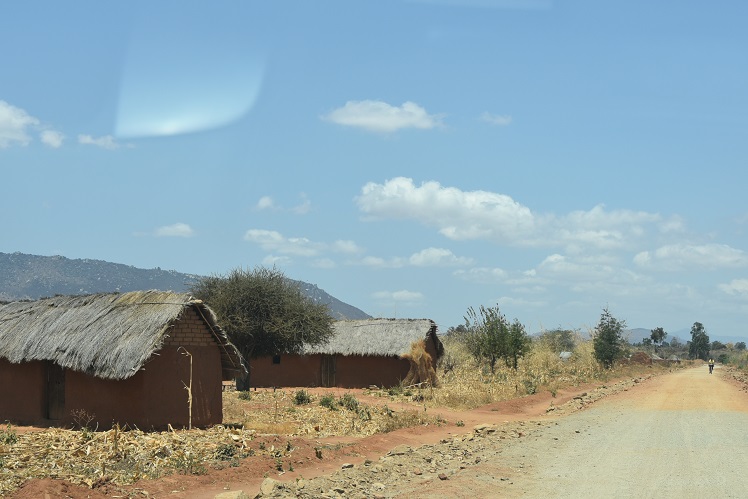
Isimani is a 90 minute drive north of Iringa; 60 minutes of paved highway followed by 30 minutes on a rutted dirt road.  Historically the area around Isimani was famous for the fine maize that they grew,

but in the last 40 years the weather changed and it started having droughts.  Now the area suffers with low to modest yields and frequent devastating droughts.  Still, with persistence, good farming practices, and the good fortune of receiving some of the spotty rainfall, a good living can be made here.


Arriving at Isimani we were reminded of our first visit here.  They had worked with Itiweni to get organized and were collecting funds to get started.  Sandy and I were getting ready for a training session in Iringa town when a short woman came hustling in and announced that she had brought in 10,000,000 TZS ($5,000) from 30 members at Isimani (they now have 63 members) and wanted to get started.  Itiweni could not believe that she had collected so much so fast.  While we decided how to handle this (this had never happened before nor has it happened since) the woman got excited, shook her finger at us, and demanded we get going.  We really liked this feisty woman and she is still one of our favorite leaders.


Our meeting took place in the new IDC warehouse.  It was tight fitting all of us into this space, but it is the nicest space available!  The chairwoman welcomed us and praised the new IDC.  But she told us next year we most likely would have to meet elsewhere because the warehouse would be full by then!

We introduced ourselves and gave a short talk, then Venance took over the meeting and gave a class on growing maize.  As he talked we quietly left to interview some members.

The first interview that Sandy had was with Amina Mtoji, 38 and married with 3 children.  Amina has been a member of the SACCOS since it started three years ago.  Her first loan was for 900,000 TZS (about $500).  She planted corn on 5 acres and sunflowers on 15 acres.  Her loan was

used for seed, spray and laborers.  She did not use any fertilizer since the land around Isimani “does not need any” (she is likely wrong about this, but we will have the soil tested to find out what it needs).  After repaying her loan she was left with a profit of 300,000 TZS, which was used to increase their savings and buy more shares in the SACCOS.

Amina’s second loan was for 1,200,000 TZS (about $600), some of which was used for farming, as in the previous year, and some of it was used to buy more inventory to expand their lumber business.  They again planted sunflowers and maize.  The crops were not very good that year, but the lumber business did well and they again made a good profit.  They saved some, bought some more shares in the SACCOS, sent their son to secondary school, and improved their house.


Her third loan was for 1,200,000 TZS ($600).  She said that she had enough in savings to qualify for a larger loan, which they wanted, but the SACCOS had a long list of people wanting loans and not enough capital so everyone agreed to borrow less than they asked for.  She hopes that she will be able to take out another loan this year. 

She told us that they have again increased their lumber business and planted maize and sunflowers.  She is just harvesting her crop now but it looks very good.  The lumber business has also been good so she thinks they will earn a lot, perhaps 2,000,000 TZS ($1,000), maybe more.  They are already planning to send their two oldest children to secondary school and then to college.  They are trying to build up their resources so this is possible. 


The next member we visited with was Robert Myavidogi, 41 and married with 5 children.  Robert has also been a member of this SACCOS since it first began.  Three years ago he borrowed 300,000 TZS ($150) from the SACCOS to plant 2 acres of sunflowers using improved seeds and fertilizer, and hiring two laborers. (These are year-round hired helpers, so he is contributing to the economy of others in his village.)  He told us that since the SACCOS was new he wanted to “sample” it, so he planted only 2 of his 20+ acres using his loan. That year his crop yielded 10 bags of sunflowers, which sold for $230 and after loan repayment gave him an $80 profit.  He used his profit to clear more land to plant in the future. He told us that clearing and preparing land will take 2 years – so he is planning ahead.

Robert didn’t increase his savings or shares, so his second loan was the same as his first, 300,000 TZS, or about $150, used again for 2 acres of sunflowers. The crop was better this year so he earned a $110 profit.  He used some of this money to improve his home and with the rest he increased his savings. 

Last year, due to increased savings, Robert was able to borrow $300.  With these funds he bought some cows and a goat.  He also planted 5 acres of sunflowers.  He has sold 15 bags of sunflowers to repay his loan and is keeping some for when the prices rise.  He expects to earn $250 or more when he has sold his whole crop. This year he will need to pay for school fees for his oldest son.  He also wants to finish fixing his home and clear some more land.  He tells us that since the SACCOS has come life has changed a lot.  He is looking forward to seeing his farm grow along with his live stock. 


Sandy finished with her interviews just after the meeting had ended.  Tom then got together with the chairman and Secretary to review their records.  Overall the members of this SACCOS had a bad year last year.  The rains were spotty so although some got a good harvest many got very little.  Right now it looks like everyone made at least a little money – but for many, it was probably only a 10-20% profit on their loans.  Still, as the chairman told us, “Everyone is paying.  We will have 100% repayment again this year.  We all know that it is a hard year, but without Iringa Hope it would be a total disaster.”

We got in our truck and headed back the way we had come.  We are going to Ilambilole.

Thursday, October 5, 2017

At Ipalamwa

After leaving Ukwega we headed back down the road we came on and 30 minutes later arrived at Ipalamwa!

As we turned to go to Ipalamwa we found one of our
members walking to our meeting
We were again met by a group of people who have been waiting for us.  Attendance at the meeting, while fairly good, was only about 1/3 of the SACCOS membership, due to the not-uncommon occurrence of a village funeral. 

Once again the meeting started with the chairman giving us a report on their SACCOS and AMCOS.  There seems to be an element of village rivalry going on between the neighboring villages of Ipalamwa and Ukwega.  With a brand new IDC building in Ukwega, Ipalamwa is sure thinking that they could use one too!

The Ipalamwa SACCOS has 6,500,000 TZS in capital and has borrowed 15,000,000 TZS from Iringa Hope making 21,500,000 TZS (or about $9,800).  They do not have an IDC here but they emphasized that they REALLY NEED one.  Both of the chairmen asked me how they might get one for their community.  I told them the Joint SACCOS board makes the selections, and my job is to work to find the funds. This seemed to satisfy everyone and the meeting moved on.

When it came time for Jane to speak on behalf of the Morogoro Central Rotary club she spent a little
There was a good turn out for the meeting.  Jane explained
her club's role in our International Rotary grant.
time explaining the Global Grant that we are receiving.  There were lots of smiles and applause for this and people were clearly excited.  This SACCOS, like all of the Iringa Hope SACCOS, needs more capital for their members and hopes to get a larger loan from the Joint SACCOS this year.

After the general meeting, Venance, the agronomist, gave a class on planting techniques for growing potatoes, a crop that isn’t grown often here, but will likely due well in the area.  During his class we conducted interviews with two of the members. 

The first member we talked to was Kastori Mtengera, 68 and married with 5 children
and 5 grandchildren.  He has a sister who is ill so he and his wife live with her.  Kastori has belonged to the SACCOS since it started and has taken out 3 loans.  His first loan was for $40 which he used to fertilize his beans.  After repaying his loan he had a profit of $175, which he used to complete a brick home they had been working on.  His second loan was for $45.  Once again he used this to fertilize his beans.  This time, after repaying the loan, his  income had increased by $150.  He and his wife decided to build another house so they will have one to rent, so this profit started another building.  His last loan was for $48 which he again used for his beans.  This year his profits increased by $189 which will be used for the new house.

We then talked to Scola Kadinde, 35 and married with 4 children.  Scola has 2 children going to a public secondary school, 1 child in primary school, and 1 in preschool.

Scola has been a member of the SACCOS here for 2 years.  So far she has taken out 2 loans.  Her first loan was for $75 which she used to fertilize her beans.  This increased her profit by $225.  She used these profits to buy 2 pigs, a bore and a sow, which will hopefully produce a nice litter of piglets in November.  She also paid school fees for her children.  Her second loan was for $125.  Once again, she used this loan to fertilize beans, getting a $300 increase in profit.  She used these funds to pay the children’s school fees and is planning on saving some of the rest so she can qualify for a larger loan this year.

Scola seems a vivacious and bright young woman with well-thought-out plans for her farm loans.  For example, her 5-month farm loan took her through one bad harvest due to climate, and allowed her time and money to plant a second crop, hiring help for expediency.  This second planting gave her a high enough yield to offset the first planting, repay her loan and still see a profit. 

After we had talked to these members we went back to the meeting. Things were starting to break up
so we waited outside and talked to some of the people as they left.  People here are very happy with their SACCOS and are working hard to get their AMCOS going as well.  They clearly see these two as having key roles in their futures.


Before we left the chairman asked us to come to the Pastor’s house for chai.  Chai was a full meal with rice, beans, spinach and chicken.  We didn’t need dinner tonight, which is just as well, since we returned to the apartment quite late.


Jane and Dynas are heading back to Morogoro tomorrow morning.  They are satisfied with what they have seen and learned.  They told us, “You have a wonderful, highly competent staff here.  The members are clearly benefiting greatly and are taking care of the funds they receive.  We are very happy with Iringa Hope.” 


Needless to say, we were pleased to hear such high praise coming from two very accomplished and successful women.  We are very appreciative that their Rotary Club has taken on the responsibility of supervising and reporting back to Rotary headquarters on the global grant that Iringa Hope received from Rotary International. 


Today has been a long and tiring day, but filled with good conversation with SACCOS and AMCOS members, along with excellent reports on their progress.

The trees in Iringa are really lovely this time of year.

We start at Ukwega

This morning we met the Morogoro Rotarians at their hotel, the New Ruaha Inn, where we joined them for breakfast.  We got an early start to the day with the full complement of MFI staff members.  We were such a large group that we needed two cars.  The young MFI staff members decided that “babu mzee” (old grandpa) should have a driver for the long journey ahead, so in addition to the staff we were joined by our driver, Daniel. Itiweni, Peter Silayo (our SACCOS field agent), Jefa Duma (Joint SACCOS/AMCOS manager), Gideon (our agricultural intern), Venance Msigala (our AMCOS agronomist), Jane and Dynas (Morogoro Rotary club representatives), and Sandy and Tom were on our way to Ukwega at 8:00.


Ukegwa is a 2.5 hour drive south of Iringa town on a dirt road. The road is rough but the scenery is awesome, passing through woods, along ridgelines, up into the hills, and finally to Ukwega.  The road was actually pretty quiet today with only a few lumber trucks and buses.  We probably encountered fewer than five other cars on the entire drive.

We normally come to Iringa in the January-March time period.  That is the tail end of the rainy season so it is green but muddy.  This time of the year we have found most of the landscape brown and dusty.  Still, the Jacaranda trees are blooming with beautiful lavender flowers, and the hillsides are green.


Upon our arrival at Ukwega we were greeted by a large crowd waiting by the new IDC building.  The IDC here was finished in March.  It is already in steady use for meetings, record keeping, storing seeds, etc.  Ukwega has an active SACCOS and AMCOS which are growing and doing well.  There are now 92 families who have joined these co-ops, an increase of 10 from March, with another 15 on the waiting list.
The group that greeted us broke into a song and danced.  Jane had to join in.  The rest of us just watched and enjoyed the show.

Our first stop at Ukwega was at the Pastor’s house for chai.  We had not met this Pastor before, as he has only been here since March.  However, we did recognize many of the members from other visits and were happy to see everyone.

Following chai, we went to the IDC building for a joint meeting with the SACCOS and AMCOS.  The chairman of the SACCOS gave us a report on how they are doing.  They currently have 92 members and expect to have over 100 by the end of next month.  Their capital is about 12,000,000 TZS plus 22,000,000 TZS which they borrowed from Iringa Hope – so about 34,000,000 TZS altogether (roughly $15,500).  They have a collection rate on their loans of 96% so far this year with the other 4% still paying as they sell their crops.  With the new members they are hoping to borrow 45,000,000 TZS next year.

We made our introductions and then, while the meeting was taking place, Sandy, Peter, Jane and I conducted interviews.

First Sandy spoke with Atrese Kimbavala. Her last name was so familiar to Sandy, and when
Atrese 
was asked if she was related to Doricus Kimbavala, she told her that she is his sister.  For those of you who know our early history with SACCOS, you may remember that the first SACCOS that we started was started at Ihemi Parish.  When it started Pastor Doricus Kimbavala texted us from Ihemi writing, “This is the greatest day of my life.  There is great hope here at Ihemi!” That was in 2008 – so what a pleasant surprise to meet his sister and to be reminded of the beginnings of this journey that is Iringa Hope. 

Continuing with the interview we learned that Atrese is 45, married, with 6 children and 2 grandchildren.  She and her husband have also taken in 3 young orphans whom they are raising. 

Atrese told us that they moved to Ukwega after they married, almost 25 years ago, and from that time they have always rented land on which to raise their crops.  When the SACCOS formed 4 years ago she immediately joined.  She attended classes on how to plan and manage their farm, how to improve their crops, and how to budget and save money.  After saving some funds she made a plan for their farming and took her first loan of $55 for buying fertilizer and seed for raising beans.  That year her profits soared; so she saved some of the money, and used the rest to improve her family’s nutrition and household.  

Her second loan was also for fertilizer and seed with similar results, and last year after taking out a third loan, this time for $150, she had a profit of $700.  Combining this with the $300 she and her husband earn from other things, they earned a total of $1,000 – a 3 times growth in a few years!  One of the questions Sandy always asks is “How did you use your profit?” To which Atrese replied that in addition to buying the usual household things, they had bought a 10-acre farm. Sandy asked Peter how to say “WOW” in Swahili to which Peter replied, “WOW.”  Atrese smiled and laughed a little.

Next we talked to Meshak Mgata, 39 and married with 3 children.  He has belonged to the SACCOS

for 3 years and the AMCOS for 2 years.  Meshak told us that his first loan was for $50 which he combined with $75 of his own money to fertilize his beans.  That year his profit from his beans increased to $450.  He used the increased funds to buy nursery stock to plant 20,000 tree seedlings and started a nursery.  He sold 5,000 of the seedlings to pay his bills then borrowed another $200 from the SACCOS to start another batch of seedlings.  He now has 35,000 seedlings which are worth $0.15 or so each (over $5,000 in all).  He plans to sell some trees soon and will probably build a new house and pay school fees.


By the time we finished talking with Mashak, Venance had completed his lesson on the planting of maize so the meeting was ending.  A song started up from the members and they sang and danced their way out of the IDC warehouse.  We said good bye and headed down the road to Ipalamwa.
A song started up and we sang and danced our way out of the meeting.

Wednesday, October 4, 2017

A day in the office

This morning we met with Jane and Dynas, the Morogoro Rotarians, for breakfast, then headed over to the office.  Today we were planning to meet with the Micro Finance staff in the MFI building to go over records, plans, etc. for the International Rotary Grant. 

Iringa Hope built the MFI building on the campus of the University of Iringa three years ago.  It was funded by a grant from the Peter J King Family Foundation – the same people who have been funding the construction of our IDCs.  The building is very distinctive with a red roof, white accents, and a brick exterior. 

We started the meeting by introducing ourselves and our functions.  There are now 6 full time people at the MFI – so with us and the two representatives from Morogoro there were 10 in our meeting.  We discussed our organization,
how we handle funds, how we operate, etc.  Jane and Dynas had lots of questions which the MFI staff answered.  By 1:00 we were winding down so we decided to break for lunch.

Normally we would have had lunch at the University, but classes are now on break so we went into town instead.   Our talks continued over lunch, and when we were finished the group broke up, with everyone going their own way.  Jane and Dynas decided to rest up a bit and get ready for
tomorrow.  Sandy went into town to get things for our time here while the rest of us went back to the MFI building to work on our long-range plans.
At Iringa Hope we tend to make regular 3-year plans.  These plans then guide grants we apply for, funds we raise, etc.  This year we have the additional complexity of our growing network of Farmer’s Coops (called AMCOS) and how they will operate and generate the funds they need.  By the end of the day we had an outline of what we need to do and how we might get it all done.  It took a long time to discuss, but now everyone knows what is expected.

As we were breaking up Itiweni told Tom that a group of government officials wants to meet with us.   They plan to give Iringa Hope a $30,000 plot of land for future use and wanted to talk to us to communicate how excited they are about our work.  Itiweni said that the group includes Regional, District, and local officials.  We are pleased to be invited to meet with them, but whether or not we do will depend on our schedule.  We will of course meet with them IF we have time, but members come first (members ALWAYS come first) so we will have to see if we are able.


Tomorrow morning at 7 we will have a breakfast meeting and then off to the villages.

Tuesday, October 3, 2017

We arrive in Dar es Salaam and head to Iringa

Jambo Everyone-

We arrived in Dar es Salaam late on Monday.  As many of you know it is a long plane trip from Minneapolis to Dar.  It seems to get longer and longer as the years go by.

When we got to Dar, Daniel, a driver from the University who often comes to meet us, was waiting for us.  This year we bought a used car for Iringa Hope.  For the past ten years we have been making our visits using buses or motorcycles, along with catching rides with friends, pastors, and those with business in the villages.  This has been a real challenge, especially as our locations have grown and spread out.  We have been reluctant to spend any funds on a car, preferring to make as many funds as possible available to help our members.  Finally, one of our many friends sent us the funds and told us to “buy a car!” – so we have.


It is a full day drive from  Dar to Iringa so weset out early this morning.  About 1 PM we arrived in Morogoro where we were planning on meeting the Morogoro Central Rotary club - our local partner for our Global grant.

Jane Fatukubonye met us at a gas station where she had gone to clean the air filter.  Jane and the immediate past president of the club will be joining us in Iringa as we make our first village visits this week, so she needed a vehicle in good condition to make the trip.

Jane rode with us to a local resort owned by one of the club members where we met with other club members for lunch.  I gave the club one of our Lakeville Rotary banners.  They told me they had brought one for our club, but it was back in the car Jane had left at the station (I will get it later).  


A reporter had come to the meeting to get our story.  Although he is based in Morogro he often writes stories for the national newspaper in Dar.  He also takes video for their national news program.  

He had already interviewed the club and wanted to talk with Tom.  They talked a bit about the program and our club in Lakeville, MN.  He then taped a short interview with Tom and took some more pictures.  He told us the paper planned to run an article about our grant.  He also said that there would be a short clip on the news. we asked him to send us a link when he had one - and he promised to do this.  We will see!

Daniel was eager to get back on the road because he wanted to arrive in Iringa before dark, so we cut our conversations short.  The women of the club are extremely interesting and we could have visited with them for hours. 

Driving into Iringa ​we noted a number of changes since last year.  Every year Iringa develops a little more.  Unfortunately, the rural areas where we are working normally do not.  We will see how things are doing there as we travel around and interview our members.

Jane and Dinas (last year’s Morogoro Central’s President) are staying a short walk from our apartment.  We will be meeting them for breakfast in the morning and then traveling together this week.

We are off to meetings at our offices tomorrow AM.  Then it is two villages a day for awhile.  We are already getting tired thinking about it.  

Blessings


Tom